This former Blogger draft was fully rewritten, fact-checked and updated in July 2026.
A cutting tool in diving is not a weapon. Its purpose is to free a diver, buddy or animal from fishing line, netting, rope or other entanglement.
The best tool is the one that can cut the likely material, is legal where you dive and can be reached with either hand when visibility and movement are poor.
Three common options
- Line cutter: compact, protected blade and excellent for monofilament or webbing. The enclosed blade reduces accidental cuts.
- Trauma shears: effective on webbing, thin rope and clothing, with a blunt tip that is useful close to a body or hose.
- Dive knife: versatile, especially with a serrated edge, but bulkier and more exposed. A blunt tip is normally more practical than a pointed one.
Placement matters
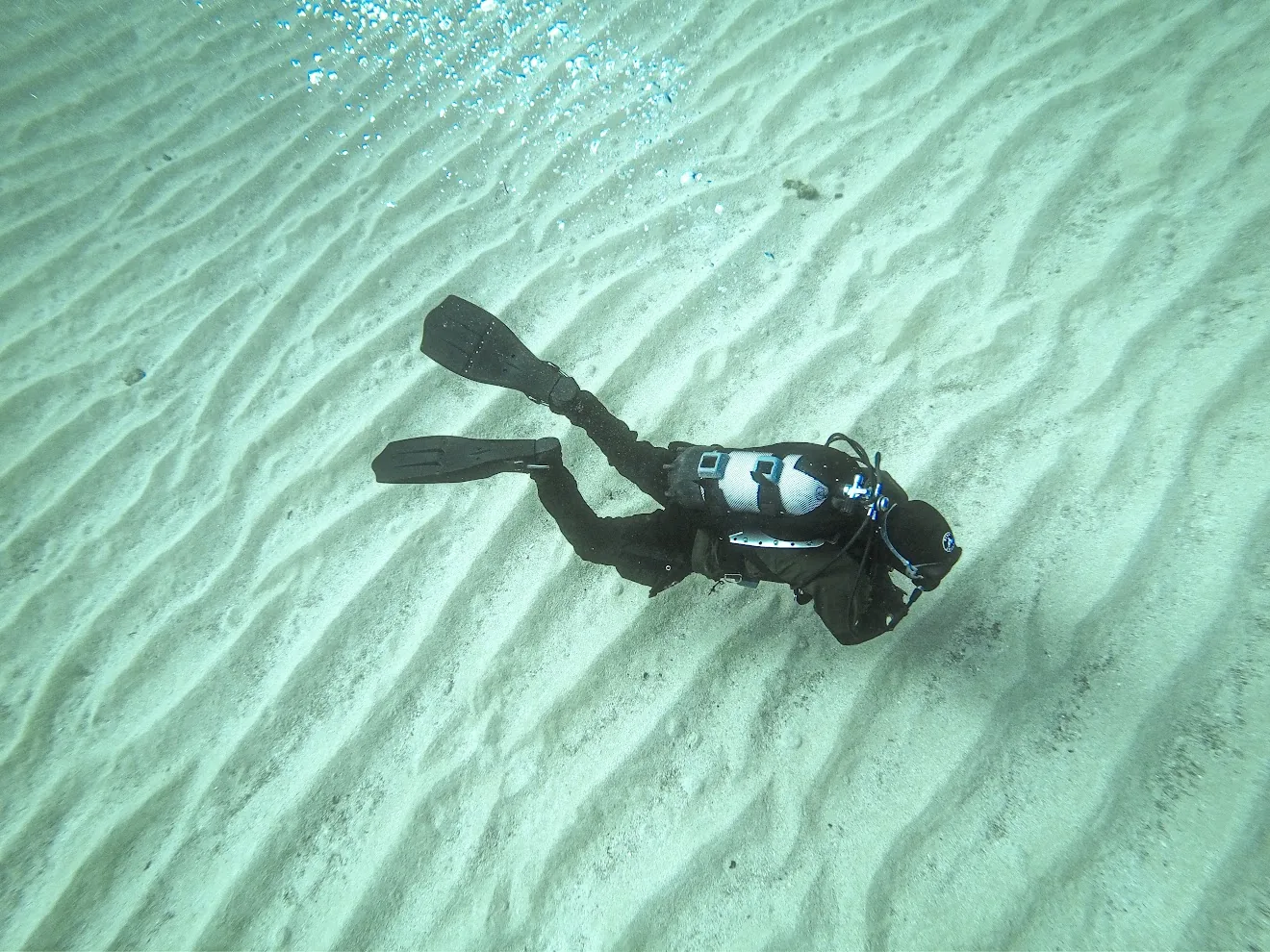
A tool mounted on the outside of the lower leg can be difficult to reach in restriction, current or heavy equipment. I prefer positions on the waist, harness or upper body where either hand has a realistic chance of reaching it. The sheath must retain the tool securely without requiring a complicated release.
One tool may not be enough
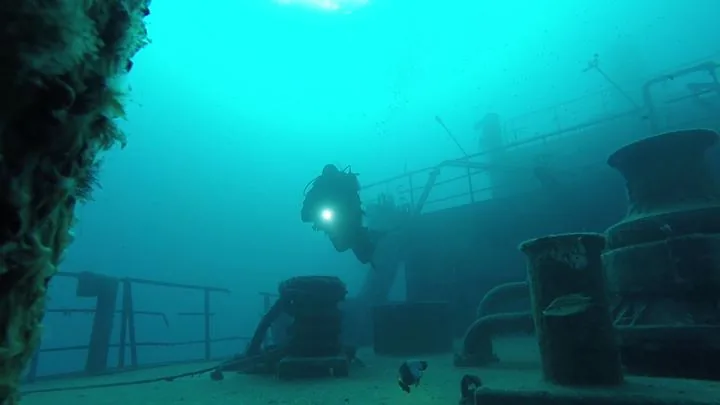
Technical, wreck or overhead divers often carry two different tools in separate locations. Redundancy is useful because a hand may be trapped or one tool may be lost. Redundancy does not compensate for poor line awareness or unnecessary penetration.
Care and legal responsibility
Rinse and dry the tool, inspect the edge and fastening, and replace corroded hardware. Knife laws and site rules vary, particularly during travel, so check local restrictions before packing or carrying one.
A simple decision
Choose for the hazard, not the appearance. A small cutter that you practise using is more useful than a dramatic knife that is difficult to reach when you actually need it.
Sources and further reading
Enjoyed this article? If you'd like to help keep the BusaBoy Archive online, you can support the archive via PayPal.