This former Blogger draft was fully rewritten, fact-checked and updated in July 2026.
A dive computer is a pressure and time recorder running a decompression algorithm. It continuously updates guidance from the profile it has measured, but it does not examine your bloodstream, detect bubbles or know how cold, tired or susceptible you are.
The useful question is not “Is this computer safe?” It is “Do I understand what it displays, which model and settings it uses, and how I will respond to its warnings?”
What most computers calculate
- Current and maximum depth, dive time and water temperature.
- No-decompression or no-stop time based on the selected algorithm.
- Ascent rate and safety-stop information.
- Decompression ceiling and stop information if limits are exceeded.
- Oxygen exposure when the analysed nitrox mix is set correctly.
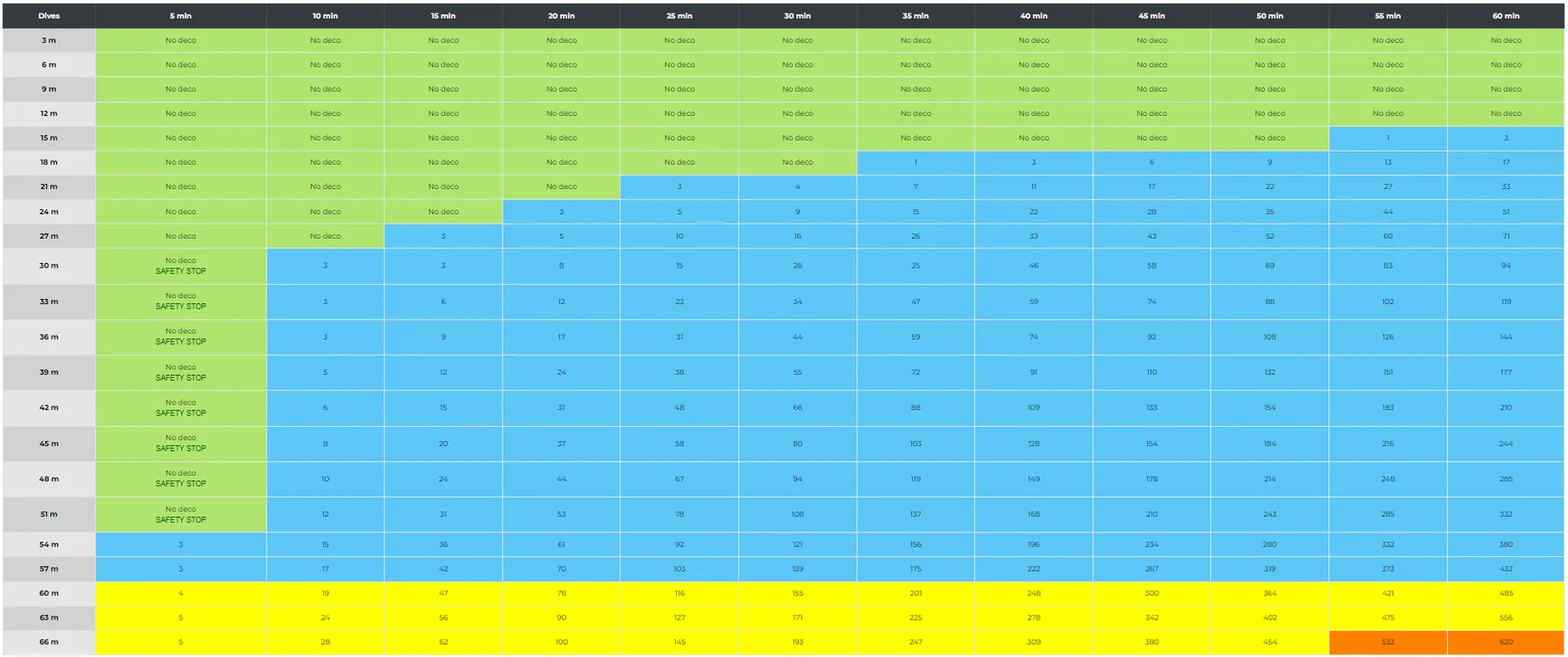
The planner lets you explore NDL, GF settings, ascent behaviour, gases, gas switches and the resulting decompression profile before you are underwater looking at the computer. Build the profile in the BusaBoy Dive Planner →
Optional features are not universal
Gas pressure and estimated remaining time require a compatible transmitter or hose-connected console. Compass, heart-rate, trimix, CCR and multiple-gas functions also depend on the model. Never assume a feature exists because another computer has it.
Use it through the whole repetitive series
A computer can account only for profiles it recorded. Do not swap computers halfway through a repetitive series and do not lend your computer to another diver. If it was not on your wrist for the earlier exposure, its decompression calculation does not represent your history.
Read the manual and understand conservatism
Personal settings, gradient factors or conservatism levels change the displayed limits. Their names can be misleading, so learn what the setting actually changes. More conservative does not mean risk-free, and a previous uneventful dive does not prove that the same profile will always produce the same outcome.
Use judgment, not obedience
Respect alarms and ceilings, but do not treat the display as permission to push every limit. Slow, controlled ascents, adequate gas, thermal management, sensible workload and appropriate surface intervals remain part of the plan.
Sources and further reading
Enjoyed this article? If you'd like to help keep the BusaBoy Archive online, you can support the archive via PayPal.