This former Blogger draft was fully rewritten, fact-checked and updated in July 2026.
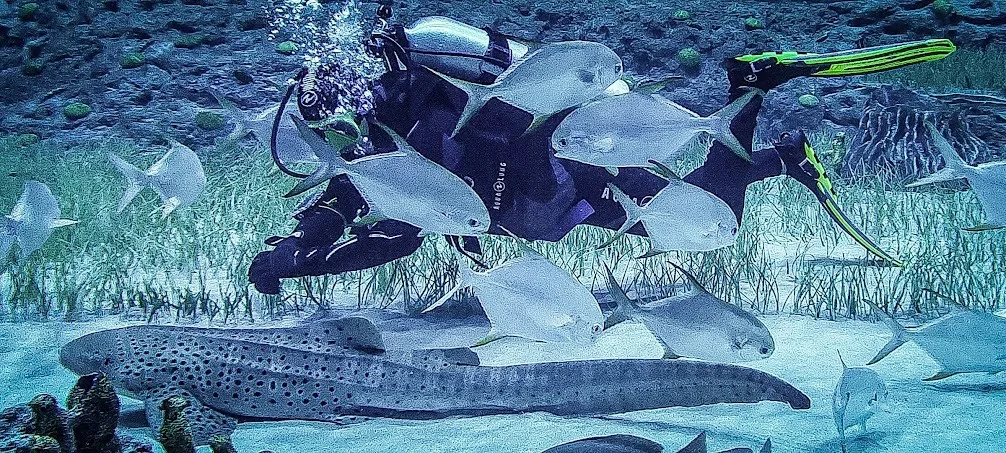
Diving in the large aquarium at the National Aquarium Abu Dhabi was different from meeting a shark in open water. The animals were accustomed to a managed environment, the dive followed a controlled briefing, and the route was supervised. Even so, entering water with several large sharks and rays produced a very real mix of concentration, excitement and respect.
My original notes listed hammerhead, tiger, lemon, nurse and bull sharks, together with rays. Because I do not have the aquarium’s species sheet in front of me while restoring this article, I am treating that list as a personal memory rather than a formal biological record.
The first minutes
The strongest feeling was not fear but heightened awareness. I watched the animals’ direction, the guides, my position and the other divers. Large sharks move with an efficiency that is difficult to understand from a screen. There is very little wasted motion.
What I observed
Some animals passed close; others maintained distance or followed established routes around the habitat. I avoid words such as “friendly” or “tame,” because they suggest motives I cannot know. What I can say is that their movements were controlled and that the dive team managed our position carefully.
Rays are not sharks
Rays and sharks are related cartilaginous fishes, but they are not the same animals and should not be grouped together casually. The rays in the habitat moved very differently, using broad fins to glide through the water and often occupying different levels and routes.
Photography without losing the dive
The temptation was to follow every animal with the camera. I had to remind myself that composition comes after buoyancy, breathing, the guide’s instructions and awareness of what was approaching from outside the frame. A close photograph is never worth blocking an animal or another diver.
What remained with me
The dive did not teach me that sharks are harmless. It reinforced something more useful: large predators deserve informed respect rather than automatic panic. Seeing them closely made the exaggerated monsters of popular culture feel even less convincing.
Sources and further reading
- Florida Museum / International Shark Attack File — Shark attack FAQs
- PADI — Responsible marine-life interactions
Enjoyed this article? If you'd like to help keep the BusaBoy Archive online, you can support the archive via PayPal.