Listen to the Discussion
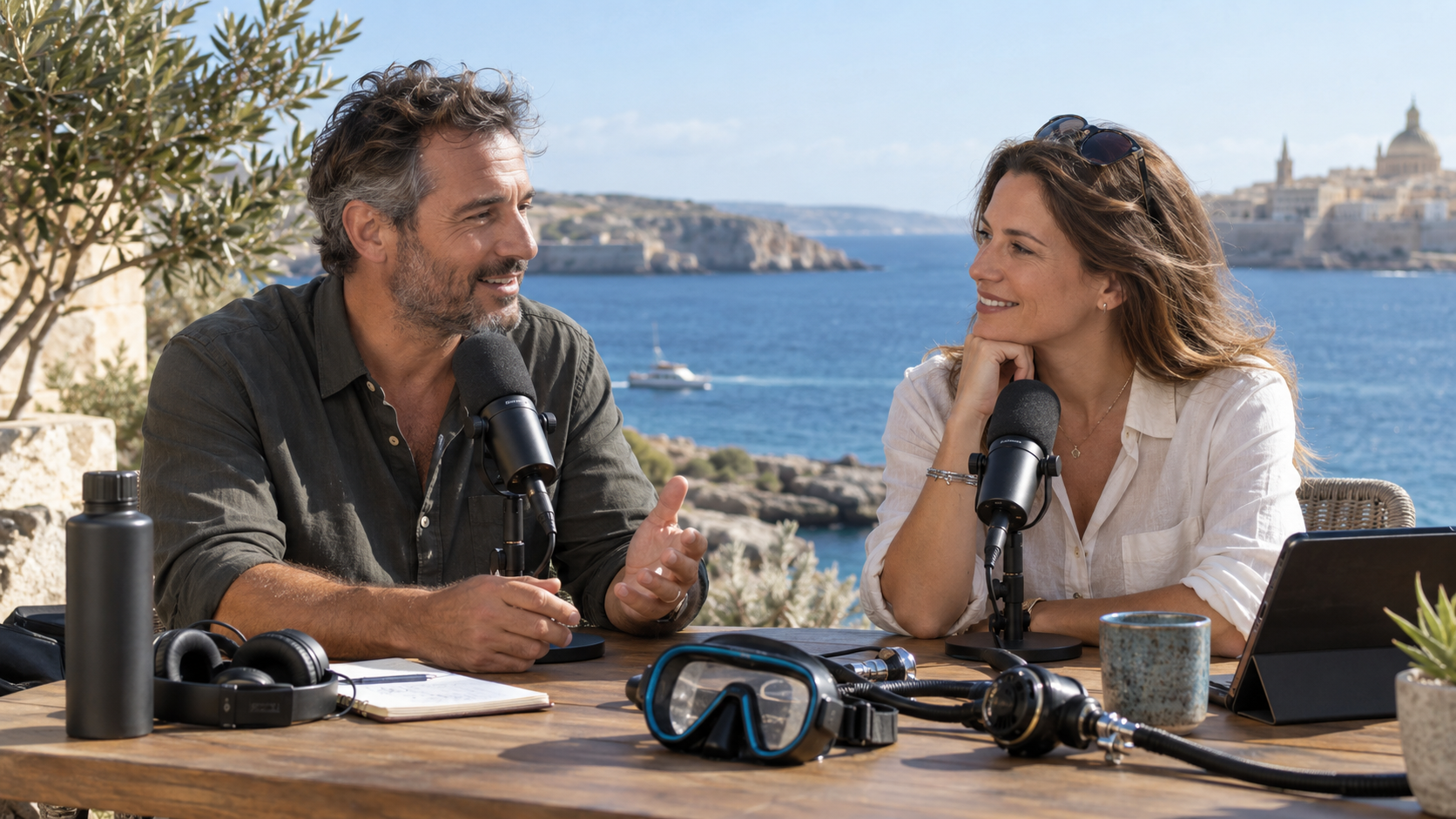
Prefer listening? Explore the ideas behind this article in our podcast discussion, or continue reading the full text below.
The Courage to Change
When I was younger, I remember washing cars using a traditional chamois leather cloth. It was what everyone used, what we had been taught, and what we considered the proper way to do the job. Years later, modern microfiber materials offered alternatives that could make the same task easier, faster, and, when used correctly, more effective. The transition wasn't necessarily immediate. People become comfortable with familiar tools and methods. When something has worked for years, changing it can seem unnecessary.
But here's the interesting part: the objective never changed. We still wanted to dry the car properly without damaging its surface. What changed was our understanding of how to achieve that result. Of course, not every innovation represents an improvement. Some traditional methods remain perfectly valid. But dismissing a new solution simply because it differs from what we already know prevents us from discovering whether it might actually be better.
This simple example illustrates something I have been thinking about for years, particularly in relation to SCUBA diving and, more specifically, diving education. Sometimes the greatest obstacle to improvement isn't a lack of knowledge. It's the conviction that what we already know is all we need to know.
When Knowledge Becomes Dogma
SCUBA diving is a fascinating combination of physics, physiology, engineering, human behaviour, and practical experience. Almost everything we do underwater involves principles that can be studied, explained, tested, and progressively understood. Yet, occasionally, the way we approach diving education seems strangely disconnected from the scientific foundations of the activity itself. We learn a procedure, repeat it, teach it to someone else, and eventually it becomes an unquestionable truth.
Why do we do it this way?
Because that's what the manual says.
Why is this configuration necessary?
Because that's how I was taught.
Could there be another solution?
No. This is how we've always done it.
There is something fundamentally wrong with this approach, not necessarily because the procedure itself is incorrect, but because the reasoning behind it has disappeared. A procedure without understanding risks becoming a ritual. And when we begin treating procedures as unquestionable truths rather than practical applications of knowledge, we move dangerously close to turning diving education into something resembling religious dogma.
I use this comparison deliberately, but not as criticism of religion. I am referring to the difference between accepting a statement on authority alone and examining it through evidence and reason. SCUBA diving is not a religion. Training manuals are not sacred scriptures, and instructors are not infallible authorities. Our knowledge must remain open to investigation, verification, and improvement.
Teaching Is More Than Demonstrating
I have been fortunate throughout my professional life to learn from exceptional instructors and educators, both in diving and during my military career. One of the most valuable lessons I learned was that knowing something and knowing how to teach it are two very different abilities. An experienced diver may possess extraordinary practical skills without necessarily having developed equally effective instructional skills.
Teaching requires much more than demonstrating a procedure and asking students to reproduce it. It requires understanding how people learn, organising information logically, adapting communication to different individuals, and evaluating whether genuine understanding has occurred. During my military training experience, educational methodology, standardisation, and clearly defined learning objectives were fundamental.
One particularly useful educational framework is Bloom's Taxonomy. In its revised form, Bloom's Taxonomy describes different cognitive processes, progressing from remembering and understanding to applying, analysing, evaluating, and creating. These concepts have important implications for diving education.
Consider something as ordinary as a pre-dive equipment check. Initially, a student learns the correct sequence. Through repetition, that sequence becomes familiar. But effective instruction should also help the student understand why each check matters, what potential problems it is intended to identify, and how to recognise when something is not functioning correctly. As experience and training progress, divers should develop the ability to analyse situations, evaluate information, and make appropriate decisions within the limits of their competence.
That is a very different educational outcome from simply memorising a sequence. Of course, diving standards must always be respected. Standardisation is essential, particularly when teaching safety-critical procedures and emergency responses. But standardisation should provide a reliable foundation for learning, not become an excuse to discourage questions. Standards tell us what we must achieve. Good teaching helps students understand why it matters.
The Problem With “We've Always Done It This Way”
Diving equipment and procedures have evolved enormously. Think about regulators, buoyancy systems, dive computers, gas management, decompression planning, and equipment configurations. Some practices that were once considered normal have been reconsidered as technology and operational experience developed.
A familiar example is the traditional practice of opening a cylinder valve completely and then turning it back a quarter-turn. For many years, this was commonly taught. Today, Divers Alert Network advises against this practice because it can contribute to confusion between a fully opened valve and one that is nearly closed.
The important lesson is not simply that a recommendation changed. The important lesson is understanding why. An instructor who merely memorised the original procedure might continue teaching it indefinitely. An instructor who understands the reasoning behind it is better equipped to recognise when that reasoning needs to be reconsidered.
This distinction becomes particularly relevant when discussing equipment configurations. I have always believed that equipment should serve a clearly identified purpose. Every component should contribute something meaningful to the complete system, whether that contribution involves functionality, safety, redundancy, or operational efficiency.
Adding equipment simply because someone has always used it is not necessarily good engineering. Equally, removing equipment simply to achieve a minimalist configuration is not necessarily an improvement. The correct decision depends on the diving environment, operational requirements, applicable standards, manufacturer instructions, and the risks associated with the complete configuration.
A recreational diver, a technical diver, and a sidemount diver may approach similar problems differently. Understanding those differences requires curiosity and technical knowledge rather than attachment to one particular configuration. The question should never be simply, “Is this how I was taught?” It should also be, “What purpose does this serve, and is it the most appropriate solution for this application?”
The Most Valuable Words an Instructor Can Say
There is something I have never been embarrassed to tell a student. “I don't know.” Sometimes a student asks a question that goes beyond my immediate knowledge. Sometimes the subject requires additional research, consultation with a manufacturer, or verification against current technical information.
My response is simple. “I don't know. Let me investigate, and I'll get back to you.” I consider this a perfectly legitimate professional response. In fact, I believe it demonstrates something essential about the responsibility of teaching.
Inventing an explanation simply to preserve an appearance of authority is far more damaging than admitting uncertainty. Students trust their instructors. An incorrect explanation can become an established belief, influence future decisions, and eventually be repeated to other divers. This is how misinformation can survive for years.
The scientific approach offers a different path. We acknowledge what we know, recognise what we don't know, investigate the available evidence, and revise our understanding when necessary. Sometimes our original explanation proves correct.
Sometimes we discover a better explanation. And sometimes we realise we were wrong. That is not failure. That is learning. Being wrong is not the opposite of being knowledgeable. Refusing to reconsider an incorrect belief is.
The Instructor Who Never Stops Being a Student
After more than 3,600 logged dives and years spent training divers, I have discovered something that continues to make teaching rewarding. I frequently learn from my own students. They come from different countries, cultures, professions, and educational backgrounds. They approach problems differently. They ask unexpected questions. Sometimes they bring knowledge from completely unrelated disciplines that offers a new perspective on something familiar.
These exchanges are among the aspects of teaching I appreciate most. Education should not be an exclusively one-directional transfer of information. Naturally, the instructor has a responsibility to guide the learning process, maintain standards, and ensure that students develop the required competence.
But that responsibility does not imply that the instructor possesses every possible answer. In fact, the more I teach, the more I appreciate how much remains to be learned. This is particularly true in diving, where our understanding of decompression physiology, individual susceptibility, human factors, and many other subjects continues to develop. We have sophisticated models and extensive practical experience, but we do not possess complete knowledge of every process involved.
That uncertainty should inspire investigation, not discourage it. And I find it especially rewarding when students continue asking questions long after their courses have finished. Former students frequently contact me through social media to discuss equipment, training, configurations, and new developments. Sometimes they ask for purchasing advice.
My recommendation is not necessarily the product I sell, the brand I use, or even the purchase they were originally considering. Sometimes the best advice is to keep the equipment they already own. Sometimes it is to consider a different manufacturer. And sometimes it is simply to wait until they genuinely need something.
I believe this independence is essential. A student's trust should never become a commercial opportunity at the expense of their best interests. When someone asks for professional advice, they deserve an answer based on their needs, not on what benefits the person providing the recommendation. The fact that former students continue seeking advice also tells me something important.
Their education did not end with their certification. They remained curious. And perhaps that is one of the most meaningful measures of successful teaching.
Authority, Trust, and the Freedom to Question
There is another aspect of diving education that deserves reflection. The relationship between an instructor and a student naturally involves authority. During training, students must follow instructions, respect established procedures, and operate within clearly defined limits. This is necessary for safety.
But professional authority should not be confused with intellectual control. A student who asks another instructor for an opinion is not necessarily questioning the competence of their original instructor. A diver who discovers a different equipment configuration is not automatically rejecting what they were taught. And someone who asks whether a procedure has changed is not demonstrating disrespect.
They may simply be trying to understand more. Different instructors can offer different perspectives, sometimes because they operate in different environments, use different equipment, or have developed experience in different disciplines. Those differences can create valuable opportunities for learning.
Naturally, not every opinion is equally valid. Technical claims must be evaluated against reliable evidence, applicable standards, manufacturer recommendations, and sound operational reasoning. But refusing to engage with a different perspective simply because it challenges our own experience is not a productive educational response. An instructor should not need to control the information available to students to maintain their professional credibility.
That credibility should emerge from competence, integrity, sound judgment, and the ability to explain decisions. An instructor who encourages students to seek knowledge demonstrates confidence in education. An instructor who discourages every alternative perspective risks replacing education with dependence.
The objective should be to develop divers who progressively become capable of making informed decisions, recognising their limitations, and seeking appropriate guidance when necessary. Not divers who believe that the last person who certified them must possess the final answer to every question.
The Effort Behind Continuous Improvement
There is one final consideration that I believe deserves particular attention. Remaining professionally curious requires effort. It takes time to read technical publications, examine new equipment, compare procedures, and investigate unfamiliar subjects.
Sometimes that effort produces a clear improvement. Sometimes it confirms that an existing procedure remains the most appropriate option. And sometimes, after hours of research, we discover that we still do not have a definitive answer. But even that outcome can be valuable.
Understanding the limitations of our knowledge is itself a form of progress. I often find myself examining small technical details, asking whether something could be improved, simplified, or explained more effectively. Occasionally, the investigation leads nowhere. Other times, it changes my understanding of a subject entirely.
The important thing is maintaining the willingness to investigate. That willingness requires humility because we must accept the possibility that our existing knowledge is incomplete. It requires commitment because meaningful research takes time. And sometimes it requires courage because changing a familiar procedure can mean questioning something we have believed, practised, and perhaps even taught for years.
But in a profession where the quality of our instruction can directly influence another person's safety, that effort is not merely an intellectual exercise. It is part of our professional responsibility. We cannot reasonably expect students to remain curious if we have stopped being curious ourselves.
A Personal Reflection
A recent technical conversation reminded me how easily a potentially useful exchange can end before it has really begun. Sometimes an unfamiliar idea is dismissed too quickly, perhaps because it contradicts an established habit, because the underlying reasoning has not yet been fully understood, or simply because we have not taken the time to examine it. I have no interest in judging anyone for that. We all have limitations, and we are all capable of misunderstanding something or reaching the wrong conclusion.
What matters is how we respond when confronted with a different perspective. Do we immediately defend what we already believe? Or do we take a moment to understand the question?
I would much rather spend an hour investigating an idea that eventually proves incorrect than dismiss a potentially valuable observation without understanding it. Because even when an investigation leads us back to our original conclusion, we may return with something we did not have before. A better understanding of why that conclusion is correct. And that, too, is progress.
Never Stop Asking Why
I do not believe that diving education should be divided into old-school instructors and modern instructors. Age is not the determining factor. I have met extraordinarily knowledgeable professionals who began diving decades ago and continue to study, adapt, and improve. I have also encountered much younger professionals who appear convinced that their initial training provided all the answers they will ever need.
The difference is not generational. It is philosophical. One approach treats knowledge as something fixed, to be preserved and repeated. The other treats knowledge as something that must be understood, examined, and continuously refined.
The first seeks certainty through authority. The second seeks understanding through evidence. And while these approaches may occasionally lead to the same practical conclusions, the educational journey is fundamentally different. I know which approach I prefer.
Not because I believe I possess superior knowledge. Quite the opposite. Because I am increasingly aware of how much I still do not know. I want my students to become confident, competent, independent divers.
I want them to understand their equipment, recognise their limitations, and appreciate the reasoning behind the procedures they use. I want them to respect their instructors without believing that instructors are infallible. And I want them to remain curious enough to continue learning long after their formal training has ended. If one day a former student comes back and explains something I did not know, I will consider that a wonderful outcome.
Because the purpose of education is not to create people who will always agree with us. It is to help them develop the knowledge and judgment to think for themselves. SCUBA diving is not a religion. Science is not dogma. Experience is not infallibility. And an instructor should never stop being a student. The ocean does not care how many certifications we hold, how many years we have been diving, or how confidently we defend our opinions.
Physics remains physics. Our responsibility is to understand it as well as possible and continue improving that understanding. So question your assumptions. Listen to different perspectives.
Respect experience, but never confuse it with absolute authority. And never be afraid to say: “I don't know. Let's find out.” Because perhaps the greatest achievement of an instructor is not creating students who remember everything they were taught.
It is inspiring divers who never stop learning. Question your instructor. Question your assumptions. Question me. Just never stop asking why.
References and Further Reading
- Divers Alert Network — Old Habits Die Hard
Reference concerning traditional cylinder-valve procedures and their modern safety implications. - PADI — Thinking Like a Diver: How to Teach It
Reference concerning the development of judgment and critical thinking in diving education. - University of Illinois Chicago — Bloom's Taxonomy of Educational Objectives
Reference concerning Bloom's Taxonomy and its application to educational design.