This former Blogger draft was fully rewritten, fact-checked and updated in July 2026.
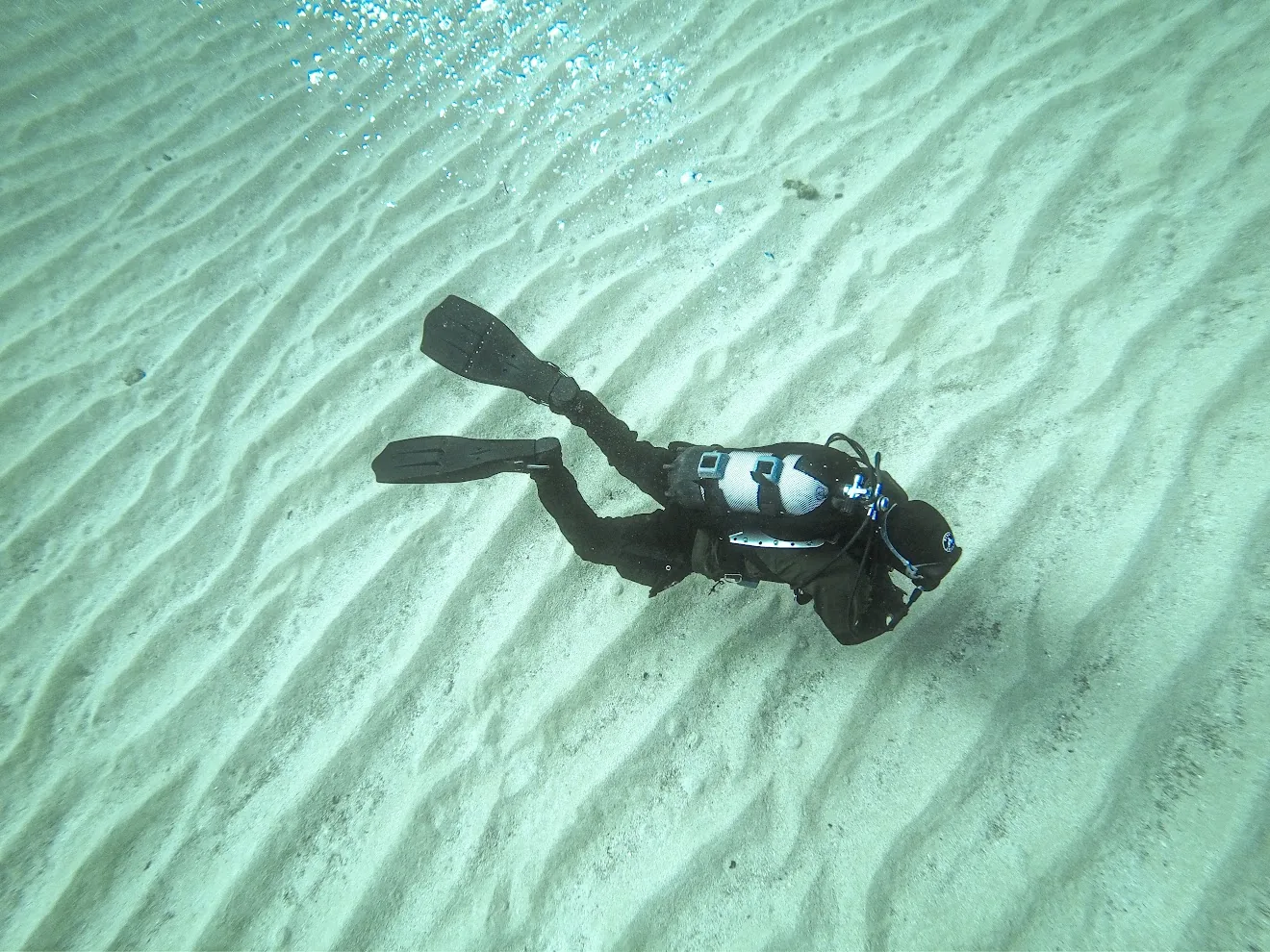
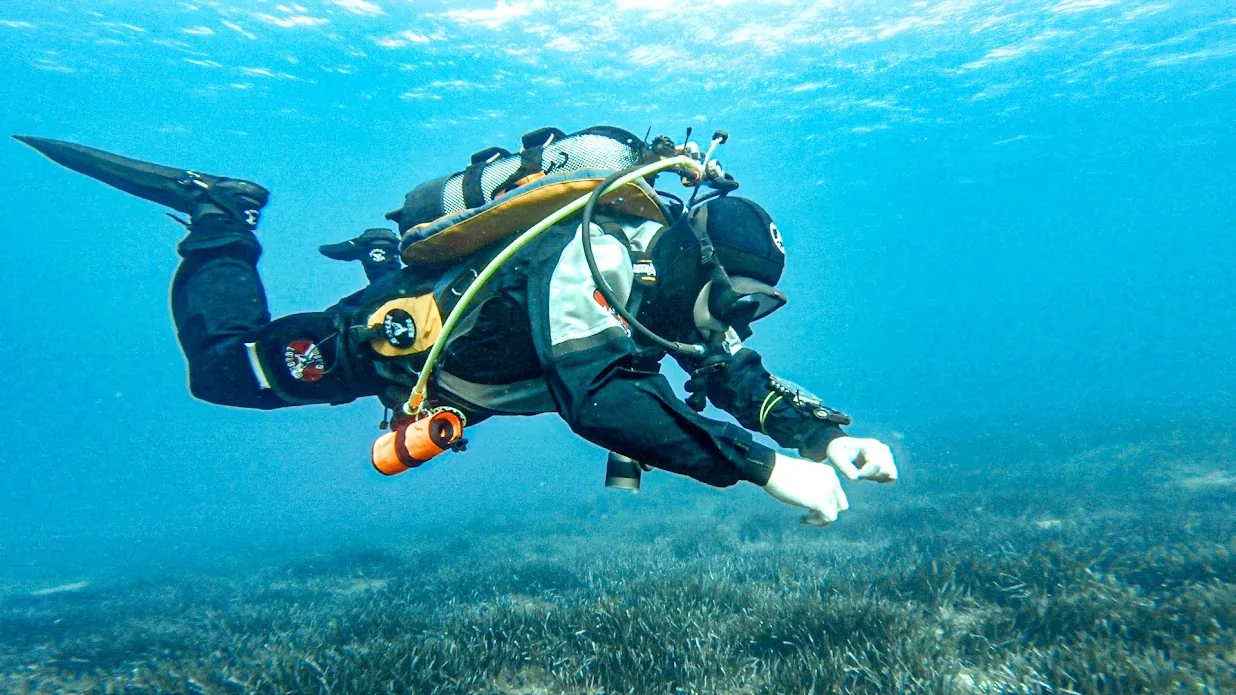
A drysuit keeps most water away from the diver’s body. It does not normally provide all the warmth by itself. The insulation comes mainly from the undergarments and the gas trapped within them and the suit.
That gas changes volume with depth, so drysuit diving requires additional skills beyond simply wearing warmer clothing.
Membrane and neoprene suits
A membrane or trilaminate suit provides a waterproof shell with little inherent insulation, allowing the diver to choose undergarments for the conditions. A compressed or crushed-neoprene drysuit provides some insulation and has different buoyancy, flexibility and weighting characteristics.
Seals, zipper and valves
Neck and wrist seals, a waterproof zipper, boots or socks and inflator/exhaust valves keep the system dry and controllable. The diver normally adds the same breathing gas used for the dive—or a separate suit gas in specialised configurations—to prevent squeeze during descent.
Undergarments do the thermal work
Undergarments trap gas in a structure that resists compression and moves moisture away from the skin. The correct choice depends on water temperature, duration, workload and personal tolerance. Cotton is generally a poor choice because it retains moisture and loses insulation.
Gas movement and buoyancy
Gas migrates to the highest point in the suit. During ascent it expands and must be vented. Poor position can allow gas to collect in the legs and feet, creating loss of control. Drysuit training teaches recovery, valve use, weighting and the relationship between suit and BCD.
A drysuit is not always dry or warm
Leaks, damp undergarments, excessive compression and long decompression can still produce cold stress. A semi-dry suit is a wetsuit with improved seals, not a drysuit. Commercial hot-water suits are another separate system.
Maintenance
Rinse the suit, clean and lubricate the zipper as specified, protect seals, dry the interior and repair leaks early. A small neglected problem can become a flooded and very cold dive.