Why sidemount fits my current diving life.
Why sidemount fits my current diving life. Sidemount is where most of my current diving life happens, so the details that once felt optional have become very obvious after repeated use.
What I notice in sidemount
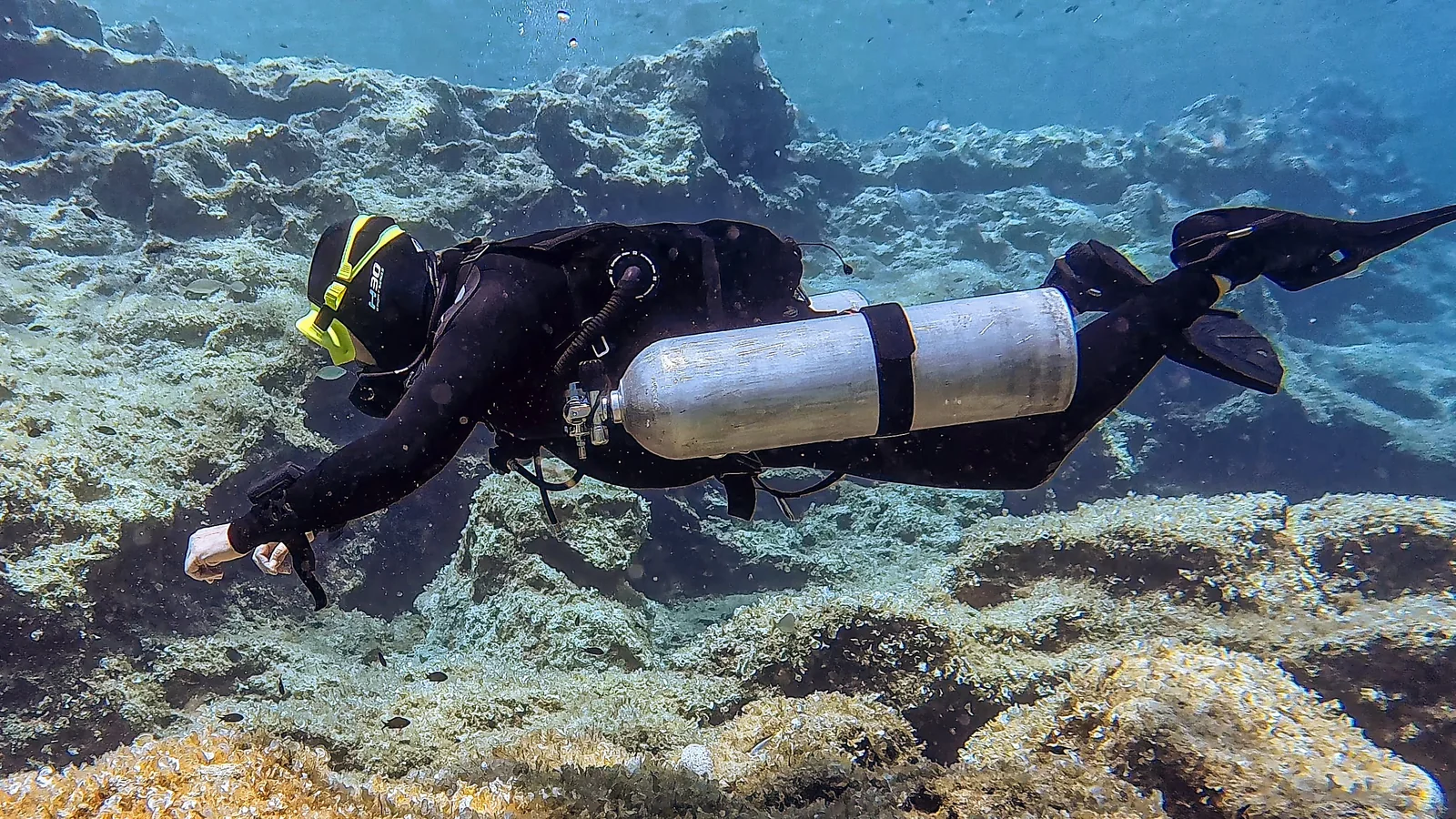
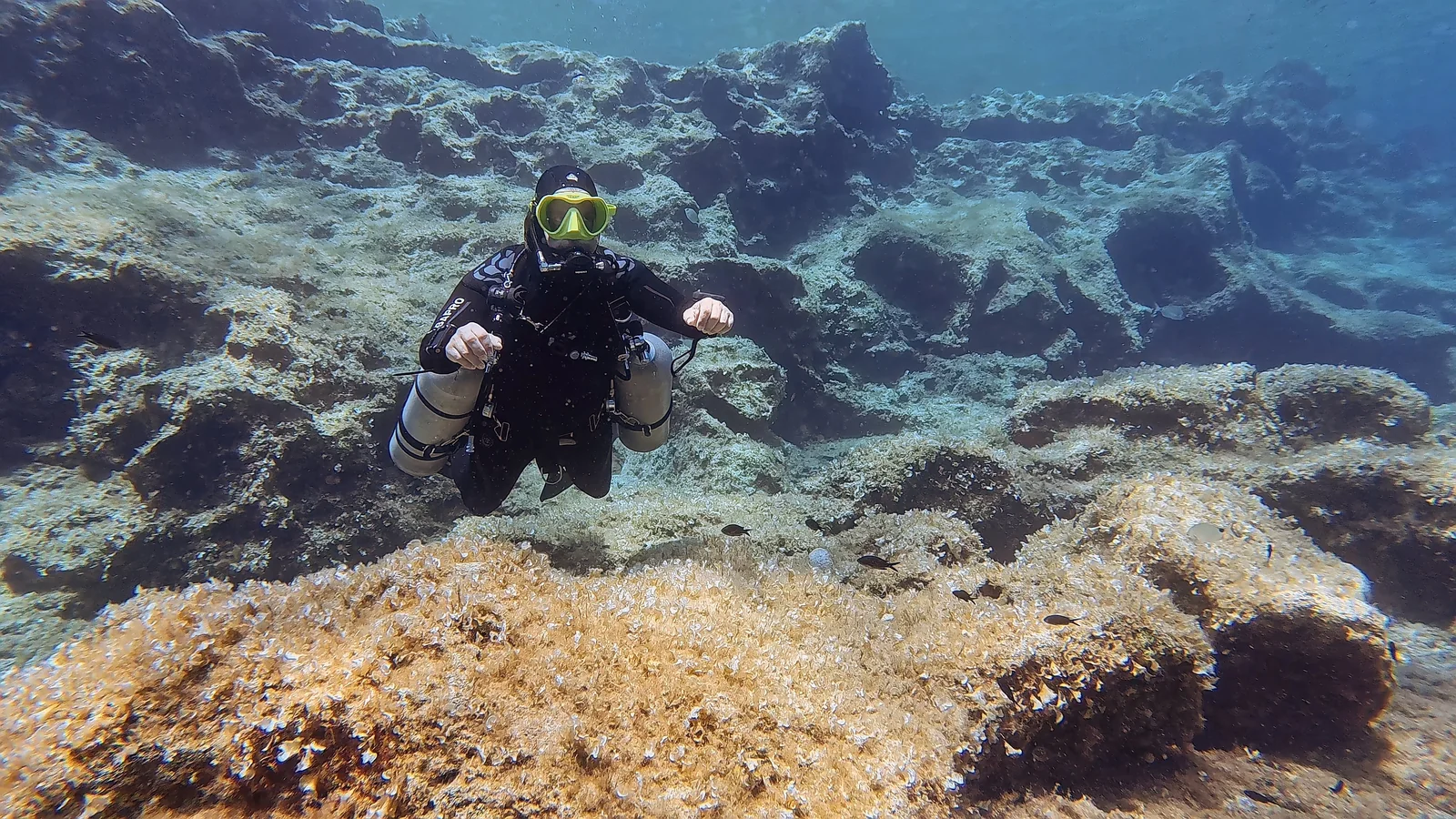
Today most of my dives are sidemount. With one aluminium S80 it can be a simple recreational configuration; with two it becomes a highly redundant platform for more demanding dives.
I like being able to leave cylinders in the water rather than carrying their full mass across a shore entry. The system rewards precise routing and placement, and it lets me separate cylinders when exploring or when logistics require it.
When I teach backmount students I may switch to backmount so my demonstrations match the configuration they are learning.
The practical point
For me, the value of the system is not that sidemount is automatically better. It is that this configuration solves the problems I currently care about with very little wasted hardware.
Why sidemount became the default rather than the exception
The strongest reason is not caves or fashion; it is the complete combination of logistics and control. I can place cylinders in the water, put on a light harness on land and connect the gas where the load becomes easy to manage. With two cylinders I have independent gas supplies and excellent access to the valves. With one S80 I can keep the same general philosophy for a straightforward recreational dive.
That does not mean I force sidemount onto every situation. When I teach people in backmount I often use backmount because demonstrations need to make sense to the student. Preference should not become dogma.
Why sidemount changes the equipment question
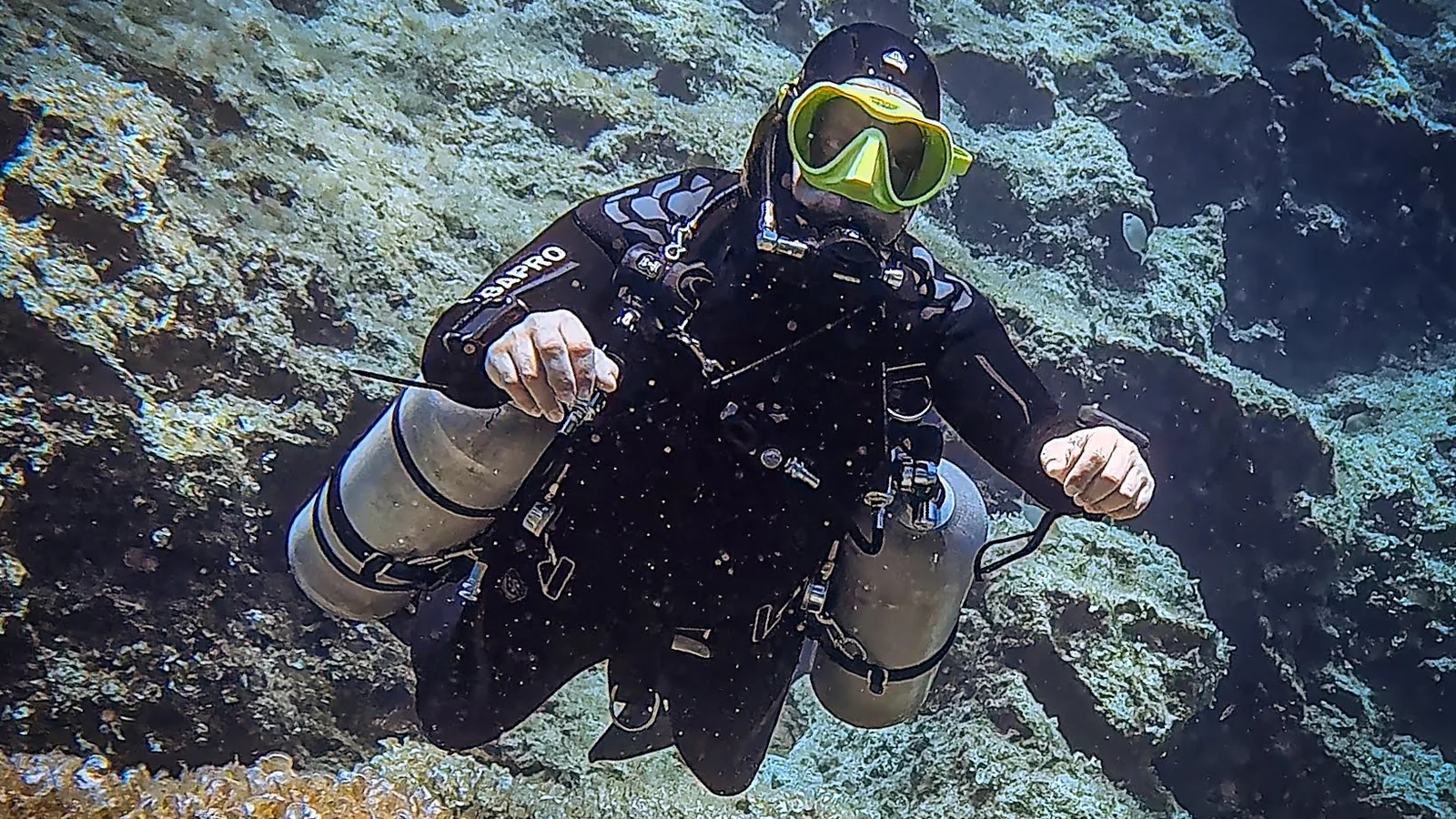
Sidemount is not simply backmount with the cylinders moved to the sides. Cylinder position, hose routing, regulator orientation, attachment points, buoyancy distribution and access all interact. That is why small details become important: the length and position of a bungee, the angle of a first stage, the position of a lower clip, whether an S80 has started to become positive, and whether an accessory can be removed for a particular dive.
Most of my diving today is sidemount. I may use one aluminium S80 for a recreational dive and two for more demanding or technical dives. One of the practical benefits for me is logistics: cylinders can often be placed in the water before I kit up, so I am not carrying the complete mass of the system across land. Underwater the cylinders become part of a very clean, balanced configuration.
Minimal does not mean stripped of safety
Minimalism only works when the remaining equipment still covers the actual problems. My two-cylinder setup gives me independent gas supplies. My current regulators keep a mechanical pressure indication even though wireless transmitters are my primary way of seeing pressure. A drysuit may provide an independent buoyancy source on a technical sidemount dive where the wing has a single bladder. Those are deliberate layers; they are not decorative redundancy.
The same thinking explains why I do not automatically fit every possible clip or accessory. If I know I will carry a cylinder out of the water, a neck clip can be useful because I can transfer the load to a D-ring rather than the bungee. If I will leave the cylinder at the water’s edge, that same clip may add no useful capability. The correct answer depends on the dive.
Configuration has to be lived in
A sidemount system can look perfect on a floor and be irritating in the water. The test is whether I can reach valves, switch regulators naturally, read or recover pressure information, donate gas, control buoyancy and propulsion, and keep the system quiet against my body. That is why I value the details of my digital sidemount gas-management configuration: information moved to the wrist, while mechanical backups stay small and protected at the first stages.
What I check before calling a sidemount configuration finished
I want valve access, stable cylinders through the gas range, repeatable regulator switches, uncluttered donation, usable inflators and a body position that does not require constant correction. Then I deliberately move, roll, reach and breathe from each side. A configuration is finished only when it still works while I am doing the dive rather than posing for a photograph.
Explore related topics
This article stands on its own, but these pages go deeper into the parts that connect directly with it: